


 When people think of traditional Okinawan crafts, many probably think of "yachimun" or "bingata," but "Ryukyu lacquerware" seems to be less well known.
I've been living in Okinawa for three years now, and collecting Ryukyu lacquerware has become my current hobby.
The smooth, glossy finish of the lacquerware beautifully complements the Okinawan hibiscus and bitter melon designs, making it a delightful addition to home parties.
This time, I found a shop where you can create your own original lacquerware, and I immediately went to try it out!
Table of contents
1. What is Ryukyu lacquerware?
2. Try making your own original lacquerware!
① Choose a lacquerware piece to serve as the base.
② Draw the design on the tracing sheet.
③ Transfer the design onto the tsuinishiki mochi.
④ Use a spatula or pigment to create a three-dimensional effect.
⑤ Cut out the pieces with a cutter and place them on the lacquerware.
⑥ Polish
3. The shop has lots of cute accessories.
4. Introducing the Shop
1. What is Ryukyu lacquerware?
Ryukyu lacquerware, as the name suggests, is a traditional Okinawan craft that has been produced since the time when Okinawa was the Ryukyu Kingdom.
Okinawa's hot and humid climate is ideal for lacquerware production, and it has long been highly valued as a tribute item and a trade item for overseas markets.
 The Tundabun is a type of bowl used in the court cuisine of the Ryukyu Kingdom.
One of the most distinctive features is a unique technique found only in Ryukyu lacquerware called "tsuikin." A paste made by mixing lacquer and pigment called "tsuikin mochi" is used to create patterns, which are then applied to decorate the lacquerware, resulting in a raised, embossed design.
While traditional Japanese patterns were once favored for trade goods, recently, modern designs featuring Okinawan motifs such as hibiscus, bitter melon, and papaya have become popular.
In our original lacquerware making experience, you can create your own unique design using this "tsuikin" technique.
2. Try making your own original lacquerware!
The process of making lacquerware involves a total of six steps.
① Select a lacquerware base, ② Draw the design on a tracing sheet, ③ Transfer the design to the lacquerware, ④ Create a three-dimensional effect using a spatula and pigments, ⑤ Cut out the design with a cutter and arrange it on the lacquerware, ⑥ Polish.
The polishing process is left to the craftsmen, but you can experience steps ① through ⑤.
① Choose a lacquerware piece to serve as the base.
During the experience, you can decorate your favorite item using the Tsuinishiki technique from a wide selection of products, including sake cups, awamori cups, and hand mirrors.
Prices vary depending on the product, and this price includes the experience fee. I chose the hand mirror!
 Front: Sake cup ¥2,100, Back: Awamori cup (small) ¥4,000, Awamori cup (large) ¥5,000 (all prices include tax)

② Draw the design on the tracing sheet.
The design is up to you! You'll draw your design on a tracing sheet. An illustration collection is also provided, so even those who aren't confident in their design skills can participate!
Simply place the tracing sheet over the illustration you want to draw and trace it to easily create your desired design.
 You can even trace the products in the store, so I chose a bitter melon design that matched one of the products. Just place the tracing sheet over the product and lightly trace the outline!
③ Transfer the design onto the tsuinishiki mochi.
Alright! It's finally time to begin the lacquering process.
 This is "Tsuikin Mochi," a rice cake-like confection made by mixing lacquer and pigments!
Three colors are available: green, red, and yellow.
 Place a tracing sheet with the design drawn on it onto the tsuinishiki mochi, and then trace the design with a pencil to transfer the pattern.
 Use a spatula or pencil to carve grooves into the veins of the leaves or the bumps on the bitter melon to create a pattern.
④ Use a spatula or pigment to create a three-dimensional effect.
 Apply pigment with a cotton swab to create variations in color and give it a three-dimensional effect.
⑤ Cut out the pieces with a cutter and place them on the lacquerware.
 Cut out the transferred pattern with a special cutter and peel it off with a spatula.
 Ta-da!
Once you've peeled off the design and stuck it onto the product you've chosen, it's almost complete!
⑥ Polish
The shop staff gave it a final polish, and it's now complete!
You can really create any design you like, so I recommend adding your name or initials. (I'm so clumsy, I couldn't cut out the letters with a cutter...)
 We made it while chatting leisurely, and with the shop staff adding the finishing touches, it took about two hours.
Some people take four or five hours to create their designs, especially if they are unsure about what to do or if they are creating a large pattern.
Two and a half hours should be sufficient, but I recommend booking with plenty of time to spare.
3. The shop has lots of cute accessories.
What surprised me when I visited the shop I had the opportunity to experience this time, "Ryukyu Lacquerware Itoman Store," was that, although lacquerware has an image of being expensive and exclusive, they had many cute little items for sale at reasonable prices.
Ryukyu lacquerware, a rare sight, makes a delightful souvenir. Even if you don't have time for a hands-on experience, be sure to check it out for shopping!
 Cute pineapple patterns and zodiac animal designs are available in sake cups from 2,100 yen (tax included).
 Chopstick rests with hibiscus patterns, etc., from 900 yen (tax included)
4. Shop Introduction
<Ryukyu Lacquerware Itoman Store>
Just a 1-minute drive from the famous tourist attraction, Himeyuri Tower!
Address: 155-2 Ihara, Itoman City, Okinawa Prefecture
Phone: 098-997-3775
Closed: None
Business hours: 9:00-17:30
(Last registration for the experience is at 15:00 PM, and reservations are required for the experience.)
Parking: Available (20 spaces)
http://www.ryukyushikki.co.jp/index.html
*The head office Tamabashi store and Kokusai-dori store are shops only (no hands-on experiences available).
Please make your hotel reservation here.
 Rakuten Travel
 Jalan net


Shirokuma Tours offers affordable Okinawa package tours. A wide variety of options are available, including tours to Ishigaki and Miyako Islands.


For local experiences and optional tours such as snorkeling and sightseeing bus tours, choose Tabi Plus One.


For diving in Okinawa, from license acquisition and fun dives to introductory experiences, choose Oceans Dive Tour.
Articles from the same area
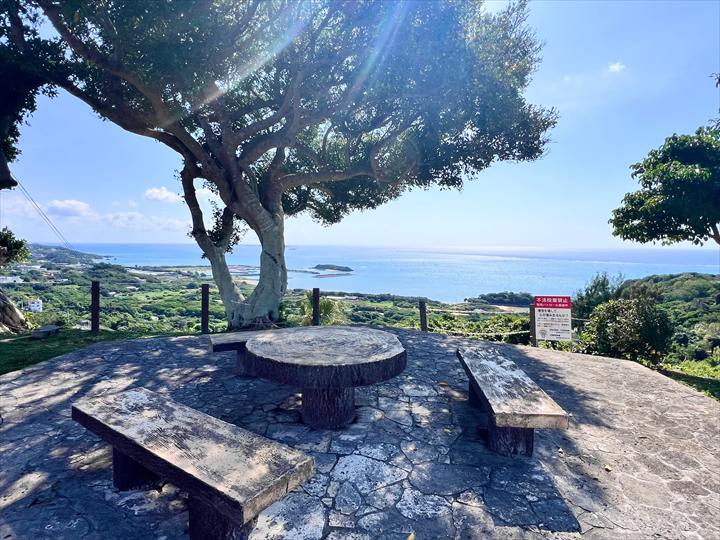 [Hidden Gem with Stunning Scenery and Historical Heritage] Nakamurakyo Rural Park
 90% of the customers are locals. I went to "Pizza Cafe Mimosa no Ki," a newcomer in the fiercely competitive area of cafes with spectacular views.
 [Nanjo City Sightseeing] Exploring Okinawa on Foot | A leisurely tour of scenic spots and history
 NotOnlyCafe | A private seat on a cliff with a spectacular view for your soul to detox from.
 Explore southern Okinawa where sugarcane sways in the breeze! 11 recommended tourist spots.
 Lunchtime at "Tsuchi-Yume Gohan Cafe," a space featuring a red tile roof and Yachimun pottery.
Articles on the same topic
 Hot springs on a tropical island! Two must-visit hot springs in Miyako Island!
 Eichin's Shuri Twelve Zodiac Castella | Cute and round castella from historic Naha/Shuri
 Hiking Guide to Yarabu-dake, a Hidden Gem of Scenic Beauty on Ishigaki Island | A Grand Panoramic Viewpoint "Troll's Tongue" Just a 15-Minute One-Way Trip
 What kind of place is Ishigaki Island Public Market? Let us introduce you to the public market where you can find everything Ishigaki Island has to offer!
 ~A Middle-Aged Photographer's Island Stroll~ "Ayahashi Seaside Station" Edition
 I went to the Tsuboya Pottery Festival, a pottery fair featuring Okinawan traditional crafts, Yachimun.