



With its unique mask and completely black, mud-covered appearance, you might be wondering, "What kind of creature is this!?" But don't worry.
The figures covered in this mud are "gods" who ward off evil and bring good fortune.
The name of the mud god is "Paantu." Let me introduce you to Paantu Punaha, a unique festival held annually on Miyako Island, one of Okinawa's remote islands!
1. What is Paantu Punaha?
2. Where and when will the Paantu festival be held?
3. Past troubles involving Paantu
4. Conclusion
Show all table of contents
1. What is Paantu Punaha?

"Paantu" is a traditional ritual to ward off evil spirits, held annually in Shimajiri, Hirara district and Nohara, Ueno district.
Paantu Punaha is a festival in Shimajiri.

Three gods covered in mud parade through the town, smearing mud on buildings and people—a truly bizarre festival.
This mud is said to be sacred, collected from a special spring called "N'Maliga" (the spring of birth)! Moreover, this mud has an intense smell, and if you get it on yourself, the smell won't go away for several days.

God mercilessly smears mud on everyone, from children to the elderly.
Furthermore, it's not just people.
To ward off evil spirits, new houses, buildings, and cars are covered in mud! In addition to praying for good health and protection from illness, they also serve to drive away evil spirits that may be haunting the new house, so they enter the house without permission.
Furthermore, it is customary for the homeowner to offer the Paantu alcohol as a form of hospitality.

Even though they and their homes were covered in mud, the locals all smiled and said, "God has warded off evil spirits for us."
It's a wonderful festival where the more mud you get smeared with, the more bad luck is dispelled and the more good fortune comes your way.
"Paantu" is designated as an Important Intangible Folk Cultural Property and is also registered as an Intangible Cultural Heritage by the United Nations Educational, Scientific and Cultural Organization (UNESCO).
2. Where and when will the Paantu festival be held?

In the Shimajiri district, the festival is held around the beginning of the 9th month of the lunar calendar, while in the Ueno Nohara district, it is held on the last day of the Ox in the 12th month of the lunar calendar.
Due to past incidents involving tourists and the Paantu (traditional Okinawan folk dancers), the Shimajiri Residents' Association has adopted a policy of not announcing the dates in advance.
If you happen to stumble upon the Paantu festival, you're lucky! Let the gods smear you with mud to ward off evil spirits.
3. Past troubles involving Paantu

In recent years, with the increase in tourists, there have reportedly been problems between the Paantu (mythical creatures) and tourists.
A few years ago, a young female tourist complained after her floral dress and camera were covered in mud. Furthermore, there was an incident where a male tourist, enraged after being covered in mud, assaulted a Paantu.
Apparently, the event was once considered for cancellation, but currently, measures such as not advertising the dates and providing guards for the Paantu are being taken.
Furthermore, it seems that signs have been posted warnings such as, "Those who do not want to get covered in mud should not enter the area."
If you want to participate in the Paantu festival, make sure to wear clothes that you don't mind getting covered in mud.
4. Conclusion
Paantu is a traditional festival that is registered as an "Intangible Cultural Heritage," and it is a precious festival that we want to preserve for future generations.
It may be difficult to plan ahead, but those who happen to encounter a "Paantu" in Miyako Island are very lucky! They are believed to be warded off evil and enjoy good health.
Be sure to experience this unique and traditional festival that can only be found in the Shimajiri district of Miyako Island!


Shirokuma Tours offers affordable Okinawa package tours. A wide variety of options are available, including tours to Ishigaki and Miyako Islands.


For local experiences and optional tours such as snorkeling and sightseeing bus tours, choose Tabi Plus One.


For diving in Okinawa, from license acquisition and fun dives to introductory experiences, choose Oceans Dive Tour.
Articles from the same area
 Relaxing at PAINAGAMA BLUEBOOTH, a photogenic cafe in Miyako Island ♡
 Buns Diner | Grandma's secret recipe yushi tofu and a set meal overflowing with the bounty of Miyako Island
 Miyako Island's Two Great Snorkeling Spots: Yaebise Reef or Sea Turtles - Which Will You Choose? [2026 Latest Edition]
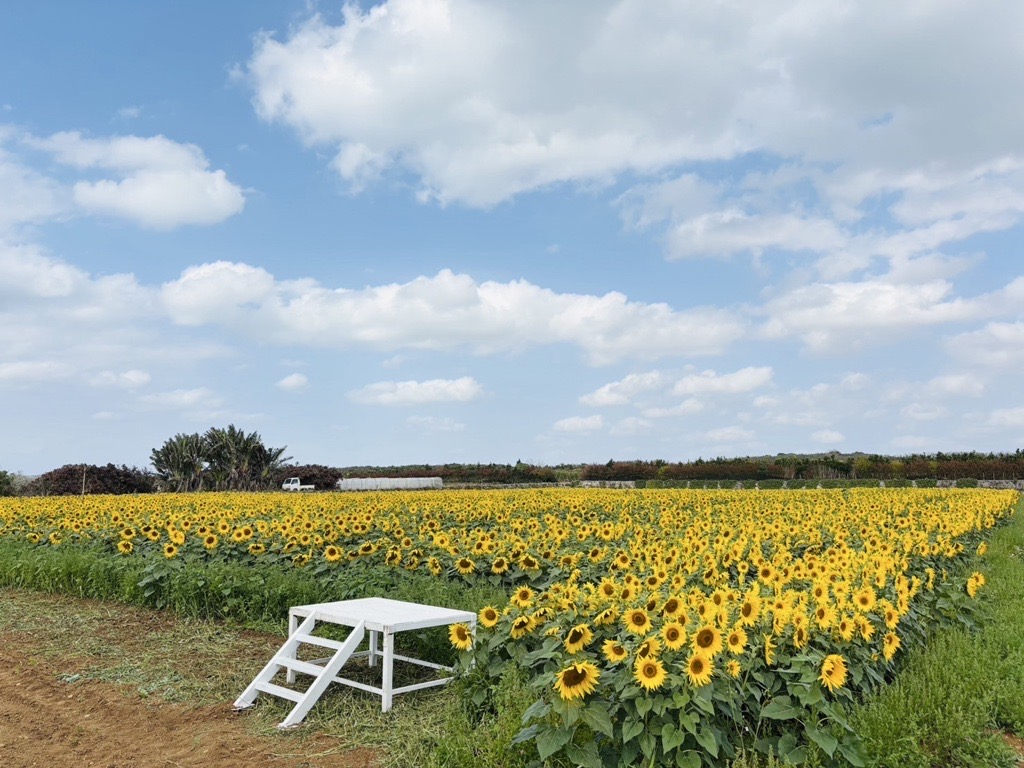 A marriage proposal on Kurima Island | A special moment just for the two of you, amidst a field of sunflowers.
 Four recommended cafes on Kurima Island | Relaxing cafe hopping on a small island
 How to get to "Nudokubiabu," a little-known, mystical spot on Irabu Island.
Articles on the same topic
 GoTo Campaign Eligible Okinawa Tours: Summary of Key Points Including Discount Amounts and Exclusion Rules
 When you think of Okinawa, you think of Orion Beer! Join us for an adult-only factory tour in Nago!
 When you think of Okinawa, you think of sea grapes! I'll teach you some delicious ways to eat sea grapes.
 Useful Okinawan dialect phrases starting today! | This is how we say it in Okinawa
 A true story from a wife who moved to Okinawa! Key points to avoid making mistakes when choosing a property in Okinawa.
 We took another look at the true identity of the Shisa, the guardian deity of Okinawa!