


When you think of Okinawa, you might imagine beautiful beaches and tranquil resorts, but the local area also holds a hidden charm.
The unique customs and culture that have arisen from the historical background and geographical characteristics are distinctive, and while they are commonplace for Okinawan residents, they may often make tourists think, "Huh?" and feel puzzled.
This article features 10 carefully selected local customs commonly seen in Okinawa that even those from mainland Japan might encounter during their travels!
1. Steak to finish off the drinking session.
2. Hand towel coaster
3. The tomb is huge.
4. 2,000 yen bills are in circulation.
5. The reunion announcement will be made by banner.
6. There are many difficult place names.
7. Zenzai served as shaved ice.
8. When it comes to tea in Okinawa, it's Sanpin tea.
9. There are lots of amulets to ward off evil spirits throughout the town.
10. Even convenience store onigiri (rice balls) have a strong Okinawan feel.
Show all table of contents
1. Steak to finish off the drinking session.

If you ask people on the mainland, "What's the perfect way to end a drinking party?", many would probably answer, "Ramen!!"
However, when it comes to Okinawa, there are quite a few people who say "steak."
Apparently, this is a result of the US military occupation era.
There are many steak restaurants open late into the night, and if you go there in the middle of the night, you'll often see groups that look like they're coming back from a drinking party.
Even the older guys can easily eat about 200 grams of it.
Depending on the restaurant, you can find steaks starting from around ¥1,000, so if you have the opportunity to drink alcohol during your trip to Okinawa, I recommend having a steak as a finishing dish.
2. Hand towel coaster

If you go to an izakaya (Japanese pub) in Okinawa, you'll almost certainly see "oshibori coasters" (hot towel coasters).
While you might think of oshibori (hot towels) as being used to wipe your hands, residents of this prefecture fold the oshibori they are given into a square and use it as a coaster.
It's larger than a coaster and has excellent moisture absorption. It's also very convenient to use even if you're a little tipsy because of its size.
3. The tomb is huge.

As you can see in the photo above, typical Okinawan graves are larger than those on the mainland and are built to resemble houses. This isn't unusual; large graves are actually the norm.
In Okinawa, it is a common annual custom to see relatives gather in front of the graves during the spring festival called Seimei-sai (Shimi), paying their respects, making offerings, and eating tiered bento box meals.
Furthermore, among the tombs, there is an exceptionally large type called a "turtle-shell tomb" (kamekoubaka), which is rarely seen.
4. 2,000 yen bills are in circulation.

The circulation of the 2000 yen banknote is also unique to Okinawa. Issued in 2000 to commemorate the Okinawa Summit, it features Shureimon Gate of Shuri Castle, one of Okinawa's most iconic tourist spots.
The reason why 2,000 yen bills are in circulation in Okinawa is because of ATMs.
When withdrawing money from ATMs at banks within the prefecture, there's a system in place that prioritizes dispensing 2,000 yen bills, and there are also ways for people who want 2,000 yen bills to indicate that they do.
Since you're on a trip to Okinawa, why not try to get your hands on a 2,000 yen bill?
While there may be cases where vending machines and other services are unusable on the mainland, they should work without any problems at cash registers where you're dealing with a person.
5. The reunion announcement will be made by banner.

The announcement for the alumni reunion will be displayed as a banner in busy local locations, such as intersections.
You might think, "How old-fashioned!", but this is deeply related to the unique characteristics of Okinawa.
In car-dependent Okinawa, banners displayed along main roads have incredible publicity power. And with social media, attendance can be confirmed in no time.
You might see them in areas with heavy traffic.
6. There are many difficult place names.

One of Okinawa's distinctive features is the large number of place names that are difficult to pronounce.
You'll find difficult place names everywhere – on traffic signs, bus stops, guidebooks, and so on. It's a common hurdle for visitors to Okinawa! (laughs)
As a side note, even for residents of Okinawa, the further you get from your hometown, the more difficult some place names become to pronounce—that's how challenging Okinawan place names are to read.
Examples of difficult-to-read place names
・Jagaru
Kochinda
・Hoei Moto (Bin)
Haebaru
・Jicchaku
7. Zenzai served as shaved ice.

When you hear the word "zenzai," you probably imagine something warm. However, in Okinawa, zenzai is generally served in a shaved ice style.
In Okinawa, the traditional way to enjoy zenzai (sweet red bean soup) is to place the soup at the bottom of the bowl and top it with shaved ice.
Incidentally, what is called "warm zenzai" on the mainland is sometimes called "hot zenzai" in Okinawa.
In most cases, the mochi dumplings are buried in ice, so rescue them before they harden.
8. When it comes to tea in Okinawa, it's Sanpin tea.

In Japan, when people talk about tea, they usually mean green tea or oolong tea, but in Okinawa, when people talk about tea, they mean "sanpin tea."
It can be purchased at supermarkets, convenience stores, and vending machines, making it a familiar item for residents of the prefecture.
Even though we refer to it simply as "Sanpin tea," various manufacturers produce it, and sometimes arguments arise based on taste preferences, such as "I prefer this Sanpin tea" or "I prefer this one."
Incidentally, it tastes very similar to jasmine tea, but to put it simply, jasmine tea is a more palatable version of jasmine tea.
9. There are lots of amulets to ward off evil spirits throughout the town.

It's a common sight in Okinawa to see "amulets" everywhere in the city.
"Shisa," which are said to protect homes from evil spirits, are placed not only on houses but also on the roofs and gates of shops and public facilities.
Incidentally, Shisa statues actually have genders; those with their mouths open are males who ward off evil spirits, while those with their mouths closed are females who prevent good fortune from escaping the house.
Also, like the Shisa, you can see them everywhere. These are stone tablets called Ishiganto, which are amulets to ward off evil.
Other examples include "hinpun" and, closer to the sea, "suijigai".
You can buy Shisa and Ishiganto at home improvement stores in Okinawa. Shisa are often found in souvenir shops, but if you really want an Ishiganto, it might be interesting to check out a home improvement store.
10. Even convenience store onigiri (rice balls) have a strong Okinawan feel.

When you visit a convenience store during your trip to Okinawa, one thing you should definitely pay attention to is the "onigiri" (rice ball).
In addition to classic fillings like salmon, kelp, and tuna mayonnaise, they also offer Okinawan-style onigiri such as pork and egg and tacos.
Even though they're all called pork and egg onigiri, there are differences from convenience store to convenience store, and locals often get into debates like, "Lawson's is the best!!" or "No way!! FamilyMart's is the best!!"
Final thoughts
This article features 10 carefully selected facts about Okinawa! While Okinawa's tourist attractions are certainly appealing, its local customs are also incredibly unique.
I'm sure you'll come across some interesting things during your trip, so I hope you can enjoy Okinawa from a slightly more insider's perspective.
Articles from the same area
 How to use Okinawa Saihakken NEXT | Okinawa version of nationwide travel support (for stays until November 30th)
 Making its debut in Okinawa! Restaurants and locations featured in the Solitary Gourmet 2023 New Year's Eve Special
 How about a relaxing island getaway? Recommendations, events, and weather for your August trip to Okinawa.
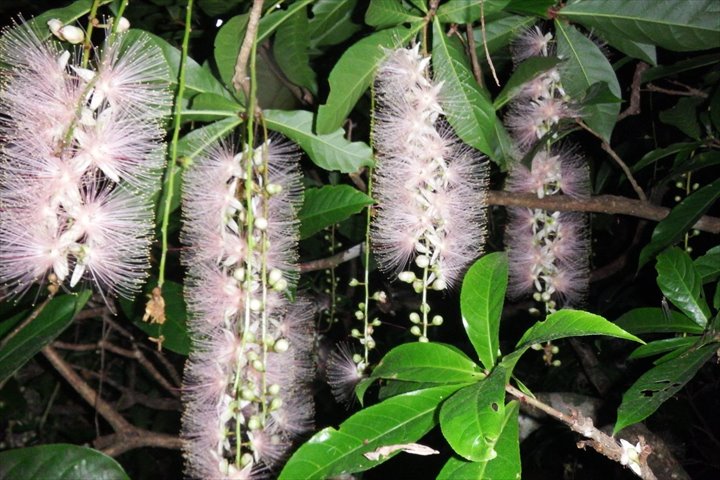 What kind of flower is the "Sagari-bana," the ephemeral flower that wilts in a single night? What is its blooming season, location, and flower meaning?
 Let's admire the tropical flowers that can be seen in Okinawa.
 I tried and compared 11 different kinds of oversized Okinawan sweet buns!
Articles on the same topic
 What's the best outfit? What to wear to enjoy a spring trip to Okinawa.
 Looking for the cheapest way to get to Ishigaki Island? We'll show you how to find budget airline tickets!
 Want to have a beach party in Okinawa? Tips for enjoying a beach BBQ on your Okinawa trip.
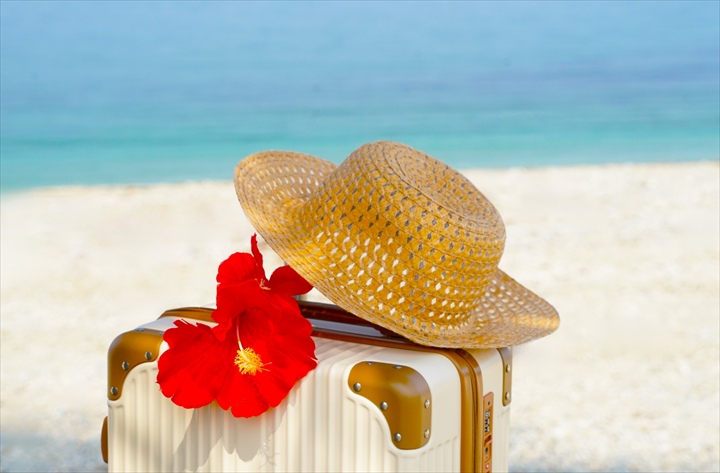 Okinawa Travel Packing List | Essential Items to Avoid Regretting What You Should Have Bring, Categorized by Purpose
 Top 10 Recommended Tourist Spots & Events in Nago [Family-Friendly!]
 Three highly satisfying itineraries for enjoying Okinawa to the fullest, even on a 1-night, 2-day trip!