



 Roselle, cultivated in subtropical regions, is a type of herb that is highly nutritious and is also believed to have beauty benefits.
Roselle has been produced on Kumejima Island, located about 100km from Okinawa Main Island, for over 10 years, and roselle tea and candy are sold at the airport and hotels.
At the guesthouse run by the grandmother who started cultivating roselle, you can experience harvesting roselle and making jam.
At first, I wondered why we'd go all the way to Kumejima just to make jam, but when I actually participated, I found it surprisingly fun.
Making jam while chatting with the grandmother in a truly Okinawan atmosphere is perfect for those who want to experience a relaxed island lifestyle.
<Contents>
1. We rode in Grandma's car to the fields! We enjoyed harvesting while chatting.
2. Time to make roselle jam! Snacks keep appearing one after another.
3. Conclusion
1. We rode in Grandma's car to the fields! We enjoyed harvesting while chatting.
I visited Resort House Minami, a guesthouse on Kumejima Island, to experience making roselle jam.
This inn has a warm and welcoming atmosphere, run by the family, led by the proprietress, Ms. Yoza (hereinafter referred to as "Grandma").
After exchanging greetings, we immediately got into Grandma's car and headed to the fields.
The peak season for roselle is from mid-November to December. Since I visited in late January, I was only shown the fields.
(If you visit during the peak season, you can also participate in a harvesting experience.)
 As we drove along the peaceful, Okinawan-style road, passing bundles of harvested sugarcane along the way, we arrived in just a few minutes.
There are countless trees, each about waist-high, lined up here.
 The slightly dark red berries at the tips of the branches are roselle.
It closely resembles a strawberry in both size and shape, and the calyx, the part that supports the petals, is edible.
 As mentioned earlier, the peak season for roselle is only about one month, from mid-November to December.
Because it is grown without pesticides, aphids will appear if the season is over.
This vibrant red color comes from anthocyanins, which are highly effective for relieving eye strain and fatigue. It's also rich in vitamin C and citric acid, making it beneficial for skin health.
They are sensitive to cold, and apparently, they cannot grow large enough to be eaten unless they are in a warm climate.
After looking around the fields, we decided to visit the vegetable garden at my grandmother's friend's house.
We'll go pick some herbs for the tea we'll be making later.
 "I came this way from a different route than usual, so I might have taken a wrong turn," she said, as she slowly made her way through the residential area.
In the residential areas of Kumejima, the Fukugi tree is still thriving.
Many old houses are still inhabited, making you feel as if you've traveled back in time to Okinawa of yesteryear.
After walking along that road for about five minutes, we safely arrived at my grandmother's friend's house.
 The fields, surrounded by Fukugi trees, are densely packed with crops. Even the plants growing haphazardly along the paths are herbs.
In addition to vegetables such as cabbage and radish, many other plants were planted there, including mangoes and noni, which is known for its health benefits.
We harvest lemongrass for herbal tea, selecting the most vibrantly colored ones.
 I thought we'd only be taking herbs, but my grandmother's friend said, "Take some Okinawan spinach and cucumbers too." There were more vegetables than I expected, and my harvest basket was full.
 I realized I'd stayed too long, so I'm hurrying back to the guesthouse.
2. Time to make roselle jam! Snacks keep appearing one after another.
After harvesting, we returned to the guesthouse and immediately started making roselle jam!
As mentioned earlier, the peak season for fresh roselle has passed, so I used frozen roselle on this day.
The ingredients are very simple: 1 kg of roselle calyxes, 500 g of sugar, 150 g of water, and a little shikwasa juice to add at the end.
Add 1 kg of frozen roselle (seeds removed) to a heated pot, then add 150 cc of water.
 After a little while, it looks like this.
 Then, gradually add 500g of sugar, stirring constantly while being careful not to let it boil down too much.
 Continue this process for 10 minutes, skimming off the scum as you go...
 As you can see, the volume has decreased so much that you wouldn't imagine it from the first photo, and you can clearly see that it's much more concentrated.
One of the characteristics of roselle is that when cooked, it becomes more acidic and develops a thicker texture.
Finally, add about a spoonful of shikwasa juice and it's done.
While the jam was cooling, they prepared tea for me using lemongrass they had harvested from the field.
 While the tea is brewing, I quickly whipped up a salad.
This dish also uses freshly picked Okinawan spinach and cucumbers.
 Before we knew it, the table was full, and tea time had begun.
I'm truly impressed by Grandma's efficiency.
Freshly made roselle jam has a perfect balance of sweetness and tartness! A delicate, fragrant flavor reminiscent of plums gently spreads throughout.
The crispy crackers and the thick jam are a perfect match. The salad is also delicious, with each vegetable having a rich flavor.
Lemongrass tea has a strong flavor, but this one had no grassy taste and had a refined finish. Freshly picked lemongrass really does make all the difference!
Incidentally, the yellow fruit in the lower right of the photo is a shikwasa, and apparently it changes to this color when fully ripe.
After enjoying the jam, the final step was to transfer it to a special container.
 I appreciate that it's made of a convenient plastic material for taking home.
Once you attach a special label to it, your original roselle jam is complete.
 I was really happy because it turned out so well, like something you'd buy in a store.
I heard it's great to put on yogurt, so I'll try it when I get home!
3. Conclusion
 I thought we'd just be making jam, but we also harvested vegetables, enjoyed a salad, and had three different kinds of herbal tea. That alone made for a wonderful lunch! (laughs)
In addition to the roselle tea and jam that I actually received, they also have candy, which is sold everywhere, including hotels and airports.
Besides the seasonal roselle jam making experience, you can also try making sata andagi (Okinawan doughnuts) for 2,160 yen per person.
Apparently, freshly fried sata andagi (Okinawan doughnuts) are incomparably more delicious than those sold in stores.
Making jam was fun, of course, but I think the interaction with the local grandmother made the experience even more meaningful.
It was an experience that made me truly understand what a relaxed "island time" is like.
If you're ever visiting Kumejima, why not give it a try?
|
<Resort House Minami> Address: 548-14 Janado, Shimajiri-gun, Okinawa Prefecture 901-3107 Phone: 098-985-8021 Business hours: 12:00-20:00 Parking: None (Please use the town-operated parking lot located a 1-minute walk from the inn.) Official HP:http://www.ryucom.ne.jp/users/minami/ |
★Let's go to beautiful Okinawa, Kumejima Island!★

Articles from the same area
 Complete Guide to Car Rentals in Iriomote Island | Recommended Companies by Port, Booking Methods, and Important Points
 Explore Kumejima Island on a leisurely bike ride! Discover the island's charm from a bicycle perspective.
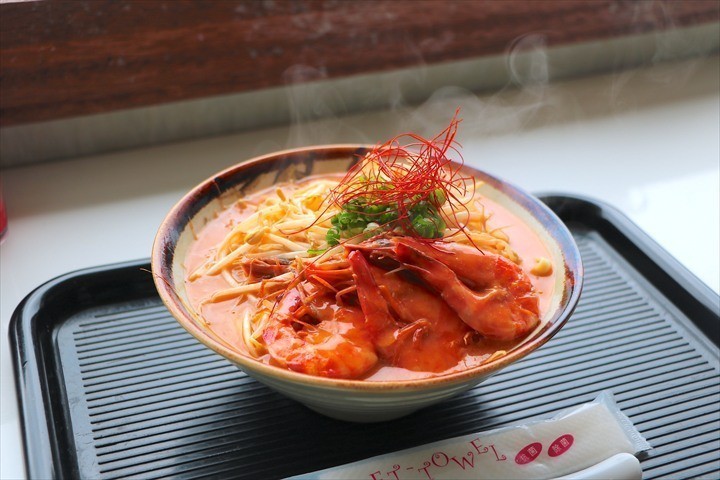 A luxurious Okinawan soba dish featuring the flavorful kuruma prawns from Kumejima's famous "Yukui-dokoro Waraijima" restaurant.
 A journey to be moved by the Kerama Blue. The allure of diving in Tokashiki Island!
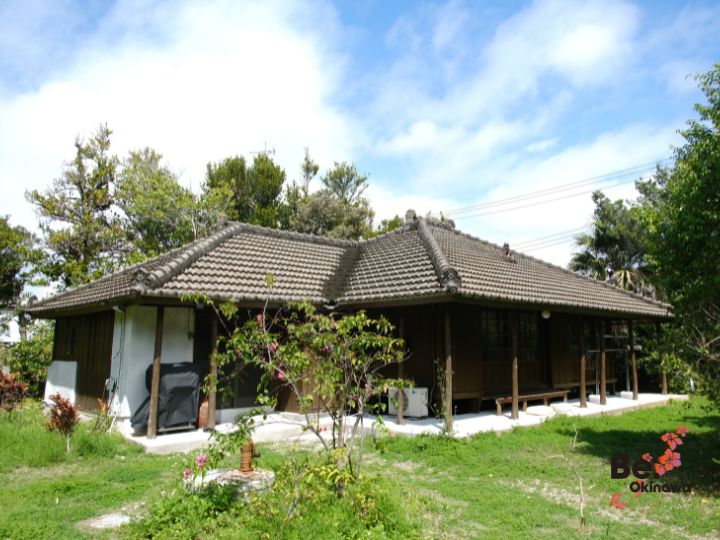 Immerse yourself in the rhythm of Kumejima Island. A travelogue of my stay at "KUMEWAKA," a resort renovated from a traditional Ryukyuan house.
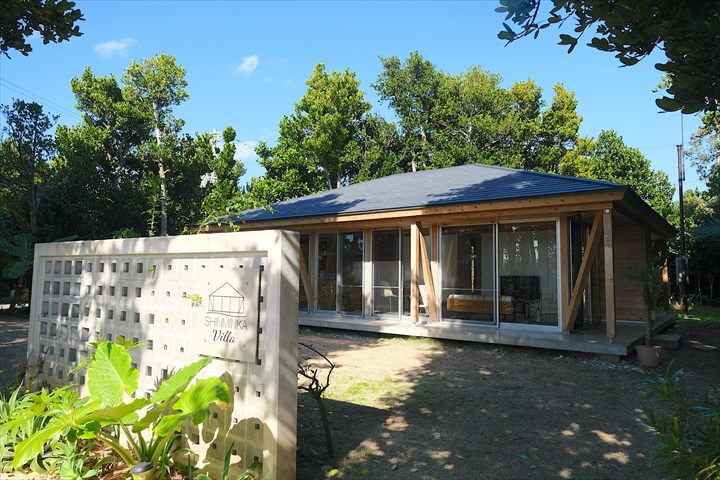 Enjoy a private, exclusive stay on Kumejima Island. Three recommended hidden gem accommodations limited to one group per day.
Articles on the same topic
 Bios Hill is the best playground! Reasons why kids become Bios Hill fans
 An experience where both families can bond through sports: Karate
 Local Moms' Picks! Recommended Kid-Friendly Restaurants in Chatan Town | Lunch & Dinner Guide
 Discover the charm of "Island Bento," the soul food of Ishigaki Island!
 For the best curry in Okinawa, check out these four recommendations from locals!
 It's not just Kabira Bay! Explore the lesser-known lunch spots and restaurants around Kabira Bay♪