






Source: Ministry of the Environment website
In July 2021, "Amami Oshima, Tokunoshima, northern Okinawa Island, and Iriomote Island" were registered as a World Natural Heritage site.
The natural environment of the Ryukyu Archipelago was the driving force behind its designation as a World Heritage Site. Many endemic species exist within this limited area, and the need for their conservation was recognized.
This article focuses on the nature of the Ryukyu Archipelago, introducing the archipelago and the endemic species found in the northern part of Okinawa Island (Yanbaru) and Iriomote Island, which are designated as World Heritage sites.
1. Where is the Ryukyu Archipelago? Its formation
2. Introducing endemic species of the Ryukyu Archipelago
2-1. Northern Okinawa Island (Yanbaru area)
2-2. Iriomote Island Area
Show all table of contents
1. Where is the Ryukyu Archipelago? Its formation
 Image courtesy of:OCVB
The Ryukyu Archipelago is a collective term for the islands that stretch from south of Kyushu to Taiwan.
It is called the "Ryukyu Arc" because it is a series of islands that form an arc.
Surrounded by the sea, the island's natural environment has undergone unique evolution over a long period, resulting in an exceptionally high proportion of endemic species among all living creatures, many of which are designated as endangered.
2. Introducing endemic species of the Ryukyu Archipelago
From here, we will introduce five endemic species from each of two areas within Okinawa Prefecture: "Yanbaru" in the northern part of the main island and "Iriomote Island."
2-1. Northern Okinawa Island (Yanbaru area)
Yanbaru Kina
 Image courtesy of:Ministry of the Environment website
The Okinawa Rail is a species endemic to the Ryukyu Islands, well-known both within and outside Okinawa Prefecture. It's characterized by its charming red beak and is renowned for its endearing appearance. Although it has wings, they are small compared to its body size, and its muscles for flight are underdeveloped, leading to it being called a "flightless bird." At the Okinawa Rail Ecological Exhibition and Learning Facility, "Kuina no Mori," located in Kunigami Village in northern Okinawa Prefecture, Okinawa Rails are kept and can be observed in their lively state.
Noguchi's Woodpecker
 Source:Ministry of the Environment website
The Noguchi's Woodpecker is a type of woodpecker that pecks at trees to make holes in the trunks. It is characterized by its black and brown feathers that cover its entire body, and its cute appearance is a key feature. It is designated as the "prefectural bird of Okinawa" and is a representative symbol of Okinawa. The name "Noguchi's Woodpecker" is also noteworthy, as it is said to have been named after a man named Noguchi who caught the bird.
Yanbaru Long-horned Beetle
 Image courtesy of:OCVB
The Yanbaru long-horned beetle is a type of beetle belonging to the Scarabaeidae family. As its name suggests, it is an endemic species characterized by its long arms (which are actually forelegs, not arms). However, the Yanbaru long-horned beetle's distinguishing features aren't limited to its forelegs. Its size is also noteworthy. Surpassing the rhinoceros beetle, it is actually said to be the largest beetle in Japan. It is a valuable insect designated as a national natural monument.
Ryukyu Leaf Turtle
 Source:Ministry of the Environment website
The Ryukyu black-breasted leaf turtle is a type of leaf turtle. Its shell resembles a fallen leaf and is characterized by three prominent ridges, as well as its reddish appearance.
Its magnificent shell gives it a dignified appearance, but the contrast between that and its size—about the size of an adult's palm—is quite striking.
The Ryukyu black-breasted leaf turtle's charm also lies in its playful side, occasionally popping up unexpectedly in the streets or in front of people, becoming a topic of discussion in local newspapers.
クロイワトカゲモドキ
 Source:Ministry of the Environment website
The Kuroiwa's Gecko is a species endemic to the Ryukyu Islands, characterized by its red eyes and sleek, elegant appearance. As its name suggests, it is actually a type of gecko, not a lizard. Because it retains primitive characteristics as a gecko, it is called a "living fossil."
This is a precious creature designated as a national natural monument.
2-2. Iriomote Island Area
Iriomote Wildcat
 Source:Ministry of the Environment website
The Iriomote cat, as its name suggests, is a wild cat found only on Iriomote Island. It is characterized by spots covering its entire body and a white line around its eyes.
Despite its elegant appearance, its adorable form—a long body, short legs, and a thick tail—is sure to capture your heart. It is a species endemic to the Ryukyu Islands and is representative of Iriomote Island.
Crested Eagle

The Crested Serpent Eagle, as its name suggests, is a type of eagle. It gets its name from the long, extended feathers called a crest that grow from the back of its head.
There's an anecdote that Yoko Gushiken, a former professional boxer from Okinawa, was nicknamed "Crowned Eagle" during his active career.
Because they fly around above Iriomote Island, they may be a relatively easy species to encounter, possibly endemic to the Ryukyu Islands.
Kishinoue's lizard
 Source:Ministry of the Environment website
The Kishinoue's skink is characterized by its long body and long tail, a form that can easily be mistaken for a snake at first glance. However, the most striking feature of the Kishinoue's skink is its size. It is said to be the largest lizard species found in Japan. Some individuals can grow up to 40 cm in length. It was designated a national natural monument in 1975.
Ishigaki lizard
 Image provided by: Iriomote Island Encyclopedia
The Ishigaki lizard only grows to about 15 cm in length, making it the smallest lizard in Japan. Juveniles are characterized by a golden vertical stripe on their black body and a shimmering blue tail. It's interesting and contrasting that Japan's largest lizard, the Kishinoue's lizard, and its smallest, the Ishigaki lizard, coexist on the same island.
Yaeyama Box Turtle

The Yaeyama box turtle is characterized by its dome-shaped, high-relieving shell. A notable feature of the Yaeyama box turtle is its ability to completely close its shell. Apparently, it's called a "box turtle" because its shell fits so snugly like a lid. It's a valuable animal designated as a national natural monument.
Final thoughts
This article introduced the natural beauty of the Ryukyu Islands, which was the driving force behind the recommendation for World Heritage status! The Ryukyu Islands are a treasure trove of nature, home to rare creatures.
However, in recent years, there have been incidents such as accidents involving cars hitting Okinawa Rails, indicating that wildlife populations are declining due to human activity.
To preserve rare creatures and abundant nature, perhaps we can enjoy our travels even more if we take action to help preserve this environment while enjoying our trips.


Shirokuma Tours offers affordable Okinawa package tours. A wide variety of options are available, including tours to Ishigaki and Miyako Islands.


For local experiences and optional tours such as snorkeling and sightseeing bus tours, choose Tabi Plus One.


For diving in Okinawa, from license acquisition and fun dives to introductory experiences, choose Oceans Dive Tour.
Articles from the same area
 If you're going to Iheya Island, you'll definitely need to take the ferry! We'll tell you everything you need to know.
 Yugafufu, a restaurant at Ishigaki Port Ferry Terminal | Yaeyama Soba
 I went to Michi-no-Eki Yanbaru Pineapple Hill Anba | Opened in 2022, it's the 10th roadside station in Okinawa.
 Solo travel to Ishigaki Island ♪ I'll tell you all about it, as I love Ishigaki Island so much that I moved there!
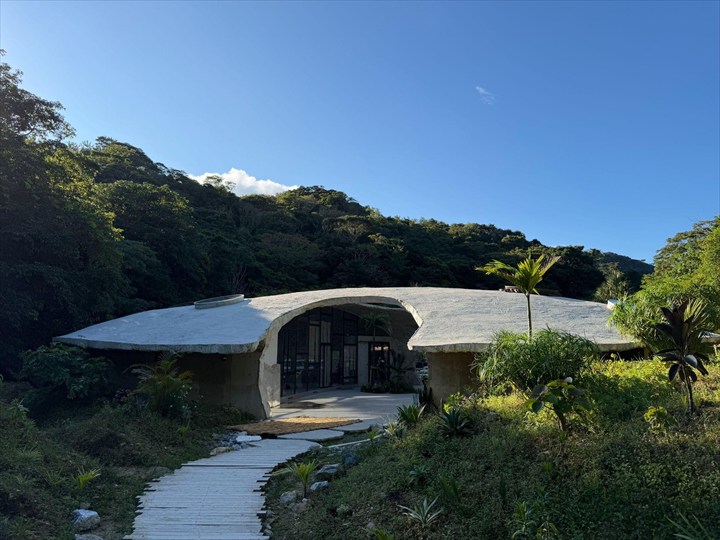 Cafe Ten no Fune | A cafe resembling a spaceship that suddenly appears in Motobu Town, Okinawa Prefecture
 Looking for a beautiful beach? Here are 10 unspoiled beaches in northern Okinawa that are popular with locals!
Articles on the same topic
 Useful Okinawan dialect phrases starting today! | This is how we say it in Okinawa
 A fan of Okinawan soba tried comparing different cup noodle versions of Okinawan soba!
 It's fun because it's a mix! A grand gathering of Okinawan American culture!
 The ultimate way to kill time, just for you! A major investigation into Okinawa's most interesting signs!
 The only place in the world! The deep charm of the "Yonehara Yaeyama Palm Grove"
 A true story from a wife who moved to Okinawa! Key points to avoid making mistakes when choosing a property in Okinawa.


