



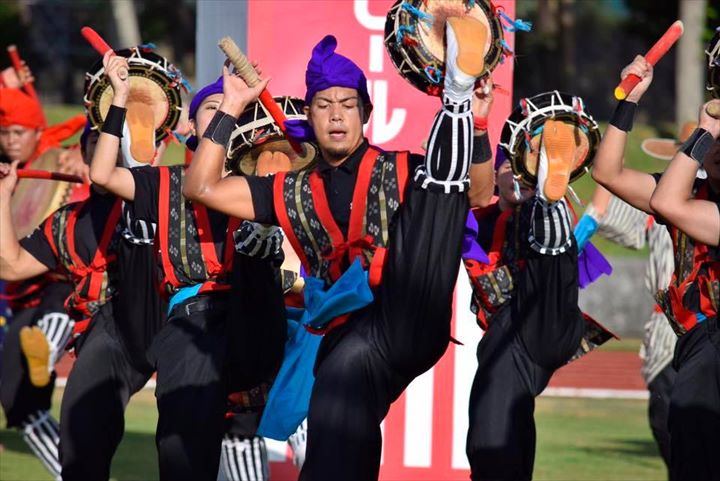
Eisa is a quintessential summer tradition in Okinawa.
With its dynamic dancing, the powerful sound of drums that resonates far and wide, and the vibrant costumes that vary depending on the youth association, this event allows you to experience Okinawan culture firsthand, and some people even plan trips specifically to see the Eisa dance.
This article will cover everything about Eisa, from its history and highlights to events where you can watch Eisa performances and notable youth groups.
Here's a look at various aspects of Eisa dance.
1. What is Eisa?
2. Highlights of Eisa Dance
2-1. Dance
2-2. Road Parade
2-3. Roles
2-3-1. Large drum
2-3-2. Shime-daiko (a type of drum)
2-3-3. Hand Dance
2-3-4. Local areas
2-3-5. Sanajah
2-3-6. Flagpole
3. Eisa Festivals and Events
3-1. Okinawa All-Island Eisa Festival
3-2. Youth Hometown Eisa Festival
3-3.1 Eisa dancers
3-4. Eisa Night
4. Prominent Youth Associations
4-1. Heshikiya Youth Association
4-2. Nakano-machi Youth Association
4-3. Nakagawa Ward Youth Association
5. Eisa songs and finger whistling
5-1. Classic songs used in Eisa dance
5-2. Let's try whistling with our fingers!
6. Conclusion
Show all table of contents
1. What is Eisa?

Eisa is a traditional performing art, similar to Bon Odori in mainland Japan, in which "youth associations" formed at the local level parade through their communities dancing during the Obon festival.
This is used to welcome and send off our ancestors during the Obon festival.
Originally, it was primarily a traditional event, but it is said that the All-Island Eisa Contest (now the All-Island Eisa Festival), which started in 1956 and was organized by Koza City (now Okinawa City), introduced elements of "showmanship" into the choreography, composition, formations, and music, making it a more entertaining form of performance for the audience.
And nowadays, it's not just a culture deeply rooted in Okinawan culture, but it's also spreading as a form of entertainment that captivates audiences, with performances being held at wedding receptions and local festivals.
2. Highlights of Eisa Dance
Even though we refer to it simply as "Eisa," there are many different aspects to enjoy.
Therefore, we have divided the discussion into "dance," "street parade," and "roles," and summarized three key points that we would like you to pay attention to when watching Eisa.
2-1. Dance

Of course, the first thing to notice is the dancing. The perfectly synchronized movements, in time with the singing and music, are truly breathtaking.
However, that's not the only appeal of Eisa dancing. I'd like you to pay attention to the differences in movements between each youth group.
Even if the song is the same, the dances are never exactly the same, and each youth group has its own unique style.
"That youth group does this kind of dance," or "This youth group has such dynamic movements"—the unique characteristics of each youth group are also part of the charm of Eisa.
2-2. Road Parade

In Okinawa, during the Obon festival, you can see a spectacle called "Michijune," where youth groups parade through the community dancing.
It is a local event to welcome and send off ancestors, but as soon as the sound of drums is heard, families and friends gather one after another just to catch a glimpse of the Eisa dance, making it a quintessential summer scene in Okinawa.
Furthermore, it's not just local residents who come; at this time of year, people even travel from the mainland specifically to see their favorite youth association.
The atmosphere, full of authentic local charm, offers a unique experience that you won't find at events like Eisa dance festivals.
(As this is a traditional local event, please be sure to observe proper etiquette if you plan to attend.)
2-3. Roles
When you think of Eisa, the image that comes to mind is probably "people dancing with big drums." However, if you look closely, you'll see that Eisa is a captivating performance created through the cooperation of people in various roles.
Here, we will introduce the role of Eisa dance.
2-3-1. Large drum

The large taiko drum is characterized by its powerful "boom!!" sound that resonates far and wide, and by dynamic performances that reflect the drum's size.
It's an important position that requires a certain amount of experience to take on, and one typically reaches after progressing through roles such as hand dancing and drumming.
As evidence of this, the rhythm of the procession is controlled by the person playing the big drum, and if the rhythm is even slightly off, the effect will spread to the entire group.
This is a position where truly skilled techniques can shine.
2-3-2. Shime-daiko (a type of drum)

The role of the shime-daiko (small drum) is characterized by acrobatic movements that are possible due to the agility of the drum, which is compact in size.
The way they spin the drum around and then swing it around, making full use of its compact size, is a must-see.
Furthermore, some youth groups use a drum called a "paranku" instead of a shime-daiko, and some have handles attached, so there are differences in the drums themselves as well.
2-3-3. Hand Dance

There are two types of hand dances: male dances and female dances. Some youth groups incorporate karate forms into the male dances, which are characterized by their masculine style.
In contrast, the women's dance is characterized by a feminine style that conveys a sense of softness. Hand dancing is not always present; some youth groups have only women's dances, while others have men's dances as well, so there are differences among them.
2-3-4. Local areas

The "jikata" are those who play the sanshin (a three-stringed instrument) and sing folk songs. While Eisa is often associated with drums, the presence of the jikata is essential for the performance and they play a vital role in Eisa.
Incidentally, while he usually stays in a fixed position at events where you can watch Eisa dance, during the Michijune (street parade), you can see the rare sight of him playing the sanshin and singing while riding in the back of a light truck.
2-3-5. Sanajah

Sanajah is known for her striking white-painted face.
Unlike the large drums and smaller drums that form processions, this position allows for free movement, sometimes even playfully interacting with the spectators.
However, while they may appear to be merely fooling around at first glance, during the street parade they are the unsung heroes who support the performance from behind the scenes. They assess the speed of the procession, urging them to slow down if it's too fast, controlling the pace, and interacting with the spectators to liven up the atmosphere.
2-3-6. Flagpole

The person holding the flag at the front of the Eisa dance troupe is the flag bearer. They hold up a flag that is several times longer than a person and do not lower it during the performance, thus promoting the presence of the youth association.
Each youth group has its own unique flag, so the flags are just as important as the dances.
3. Eisa Festivals and Events
In Okinawa, the summer months, when the Obon festival is held, are the most active time for Eisa dance activities, and various events where you can watch Eisa are held to coincide with this period.
Here are four representative Eisa events.
3-1. Okinawa All-Island Eisa Festival

The Okinawa All-Island Eisa Festival is Okinawa's representative Eisa event. Eisa groups from all over the prefecture participate, mainly in Okinawa City, where Eisa activities are said to be thriving.
Many visitors come from mainland Japan, and the festival is so popular that nearby accommodations are fully booked during the three days it is impossible to get a reservation. It is Okinawa's largest Eisa festival.
Dates: September 4th (Fri), 5th (Sat), and 6th (Sun), 2026 *Typically held in August or September
Venue: Koza Sports Park, Okinawa City
HP:https://www.zentoeisa.com/
3-2. Youth Hometown Eisa Festival*

The Youth Hometown Eisa Festival is an event held with the aim of promoting tourism while also fostering interaction and development among young people, featuring Eisa groups from all over the prefecture. Although the festival was suspended in 2015 to re-evaluate its format, it was quickly revived in 2016 with the belief that youth activities would contribute to its development. As the keyword "hometown" suggests, it is an event that conveys a strong sense of community.
Event period: Around August/September *The event has been suspended since 2024. Resumption date undecided.
Venue: Chatan Park Athletics Stadium
HP:https://www.furusatoeisa.com/
3-3.1 Eisa dancers

This Eisa dance event, featuring 1 Eisa dancers, takes place on Kokusai Street in Naha, which is closed to traffic. A unique feature is that it's open to the public. While typical Eisa events are primarily for watching, this event, titled "Niwaka Eisa" (Spontaneous Eisa), allows for impromptu participation and hands-on experience.
Furthermore, this event offers a variety of ways to enjoy Eisa, including not only traditional Eisa but also creative Eisa performances.
Date: October 19, 2025 (Sunday) *The date for 2026 will be updated as soon as it is decided.
Venue: Kokusai Street
3-4. Eisa Night

Eisa Night is an Eisa dance event held at major venues in Okinawa City. During the summer months, it is held every weekend leading up to the Obon festival.
Apparently, this event is secretly gaining attention, with some Eisa enthusiasts living on the mainland even coming specifically to see their favorite youth group.
Compared to other Eisa events, it's characterized by its casual atmosphere, offering a local feel somewhere between a street parade and a Eisa event.
Dates: June 21, July 6, August 9, 2026
Venue: Various locations in Okinawa City
HP:https://www.zentoeisa.com/news/n168.html
4. Prominent Youth Associations
It's not uncommon for Okinawan residents to have a favorite youth association. Here are some well-known youth associations.
4-1. Heshikiya Youth Association

The Heshikiya Youth Association is a youth association from Heshikiya, a region in Uruma City, in the central part of Okinawa Prefecture. While Eisa dance is increasingly focused on "showmanship," this youth association cherishes tradition and carefully preserves the forms that have been passed down for generations. They are a highly regarded youth association, having been featured in media both within and outside Okinawa Prefecture.
4-2. Nakano-machi Youth Association

The Nakanomachi Youth Association is a youth association located in Nakanomachi, Okinawa City, in the central part of Okinawa Prefecture. While youth participation in local communities is declining in some areas, the Nakanomachi Youth Association boasts a large number of members and is a vibrant organization. Their dynamic performances, made possible by their large membership, are a must-see.
4-3. Nakagawa Ward Youth Association

The Nakagawa Youth Association is a youth association located in Kin Town, in the northern part of Okinawa Prefecture. A notable feature of the Nakagawa Youth Association is its drums. The drums of the Nakagawa Youth Association have handles, which are not typically found on drums, giving them a unique shape.
This youth group deserves attention not only for their dance performances, but also for their distinctive drumming.
5. Eisa songs and finger whistling
5-1. Classic songs used in Eisa dance

There are many songs that are considered "classics" in Eisa dance, but the one I'd like to introduce is "Tōshin Dōi".
Often performed as the final song, its upbeat tempo and dynamic rhythm are sure to captivate listeners.
This is a highly recommended song that will draw you in before you even realize it and strangely lift your spirits.

The finger whistling used to liven up Eisa dances, with its unique sound different from regular whistling, is one of the techniques that gives it a distinctly Okinawan feel.
How to whistle with your fingers
① Make a ring with your thumb and index finger.
② Curl your tongue so that the tip points towards the roof of your mouth.
③ Press the ring you've made on the underside of your tongue against it and blow.
People have different methods; some make a ring with their thumb and middle finger, while others use the little fingers of both hands to blow a whistle.
By the way, you might have the impression that all Okinawan residents can do it, but in reality, not everyone can.
During practice, please be careful not to spit or become oxygen-deprived.
6. Conclusion
So, in this article, we introduced Eisa, a summer tradition in Okinawa.
While retaining its aspect as a traditional event to welcome ancestors, it has evolved and developed, now incorporating elements of entertainment.
The sheer power of the performance is even more impressive when you see it live. The dynamic dance and the booming sounds that resonate right in your eardrums are truly breathtaking.
The timing of Eisa festivals varies by region, so it's recommended to start by attending a large-scale event.
Articles from the same area
 From the rainy season to summer! A guide to enjoying your June trip to Okinawa [Sightseeing spots & events]
 I tried and compared 10 different types of "Uchinaa Bento" (Okinawan-style bento boxes) that you can buy at supermarkets in Okinawa!
 Okinawa in winter is a riot of flowers: "Okinawa Flower Carnival" | From January to May, various parts of Okinawa are adorned with seasonal flowers.
 Top 10 Wedding Photo Spots in Okinawa – Create Unforgettable Memories!
 March to May is the best time to see them! Let's go see the stunning blue landscape of "Jade Vine" that spreads across Okinawa.
 Summer has arrived in Okinawa! A roundup of recommended activities and ways to enjoy Okinawa in July♪
Articles on the same topic
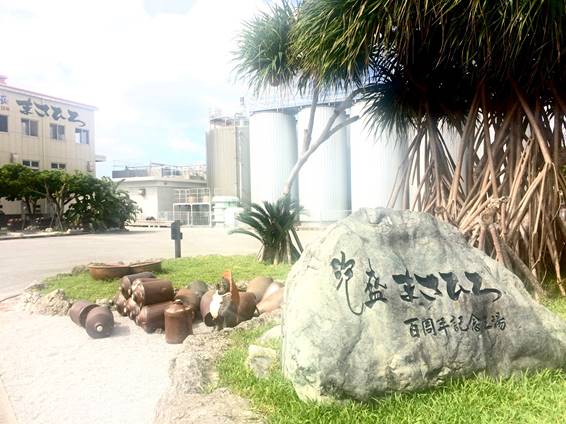 Feeling tipsy at a long-established awamori brewery | I went on a factory tour of Masahiro Shuzo in Itoman.
 A true story from the perspective of a wife who moved to Okinawa! Funny and relatable stories from Okinawa.
 Shuri Textile Museum Suikara | A world of stories about beautiful Okinawan traditional fabrics woven with rich colors
 Just looking at it makes you feel like you're traveling! Explore Okinawa with Google Street View
 Enjoy some of Japan's best stargazing at the popular Ishigaki Island Astronomical Observatory!
 A trip to Yomitan Village to experience Okinawan traditional crafts: Yomitan Hanaori and Yomitan Minsaa