



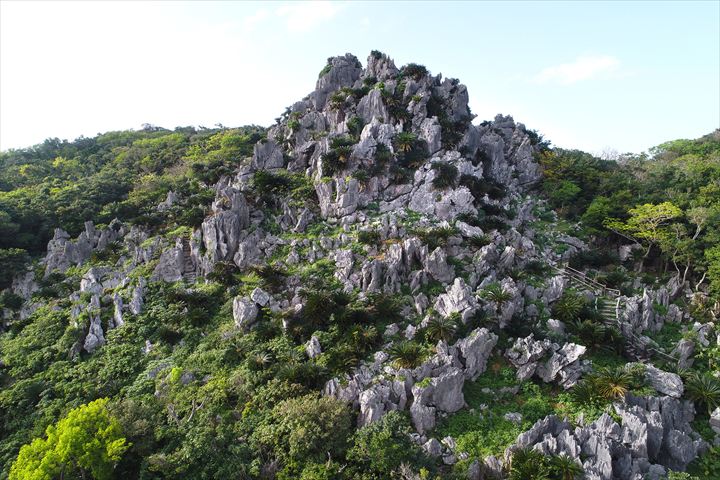
The "Asumui Hike" allows you to walk through the forest that spreads across the middle of the four-mountain range known as "Asumui" in the northernmost part of Okinawa Island, with audio guide navigation. The forest is densely covered with subtropical plants, and many sharp, oddly shaped rocks peek out, creating a unique landscape.
Asumui is described in "Chuzan Seikan," Okinawa's first historical record, as the sacred site first created by Amamiku, a god in Ryukyuan mythology. During the Ryukyu Kingdom era, the royal family prayed here for abundant harvests and the prosperity of the nation. Since the Meiji era, it has spread as an object of popular faith, and even today, it remains a sacred place with over 60 places of worship scattered throughout.
This time, we'll introduce how to enjoy Asumui Haikusu, one of Okinawa's most unique tourist spots. You're sure to be overwhelmed by the grandeur of nature and the mystical space of faith, and even more so by the incredibly inexplicable interpretations of the bizarre rock formations!
1. This is what Asumui is like!
2. How to enjoy Asmuyhiks
3. Courses and highlights of the Asumui Hikings
4. Access and Business Hours
Show all table of contents
1. This is what Asumui is like!
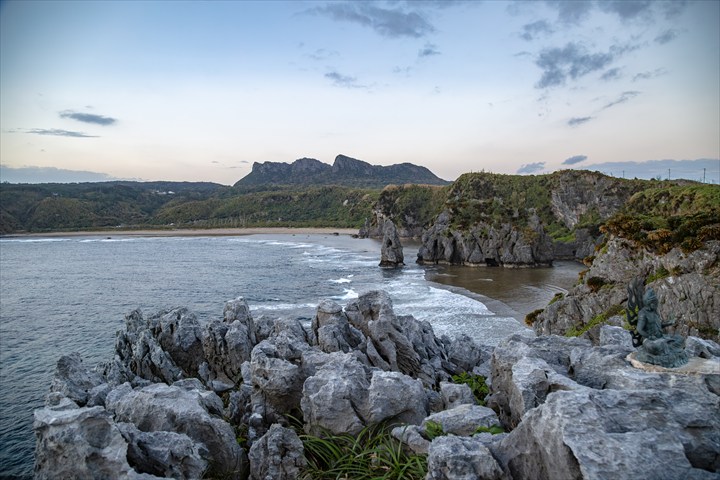
Asumui is located less than a five-minute drive from Cape Hedo, the northernmost point of Okinawa Island.
The mountain has a unique appearance, with four jagged peaks called Sinoxe, Afri, Sichara, and Iheya. This is a sight unique to karst topography, formed by the erosion of limestone by rainwater and groundwater.
Yanbaru is rich in nature, but the natural environment of Asumui, which is designated as a special protected area within the national park, is even more wild.
From near the top of the rocky mountain, you can see Cape Hedo and even Yoron Island in Kagoshima Prefecture floating in the sea beyond, making it an excellent viewpoint.
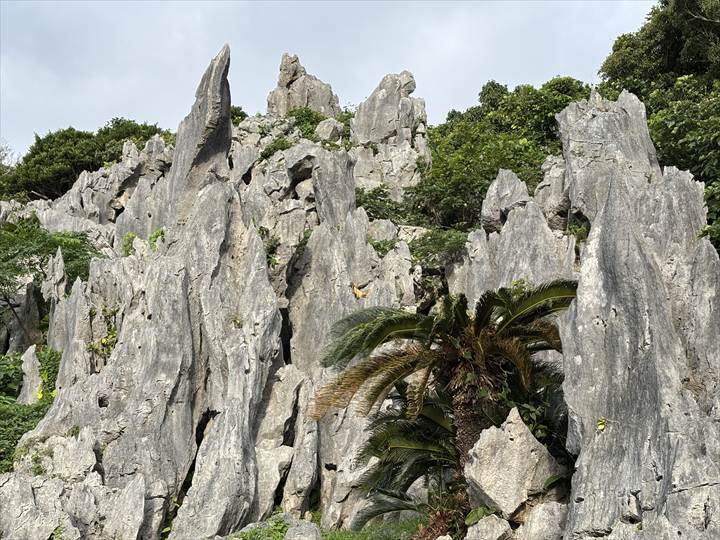
One of the defining characteristics of Asumui is the columnar limestone rock formations known as "pinnacles," found in the karst landscape. These rocks, far taller than a person and incredibly pointed, are scattered everywhere, creating a veritable forest of stones. Even in all of Japan, pinnacles of this size are rarely seen.
2. How to enjoy Asmuyhiks
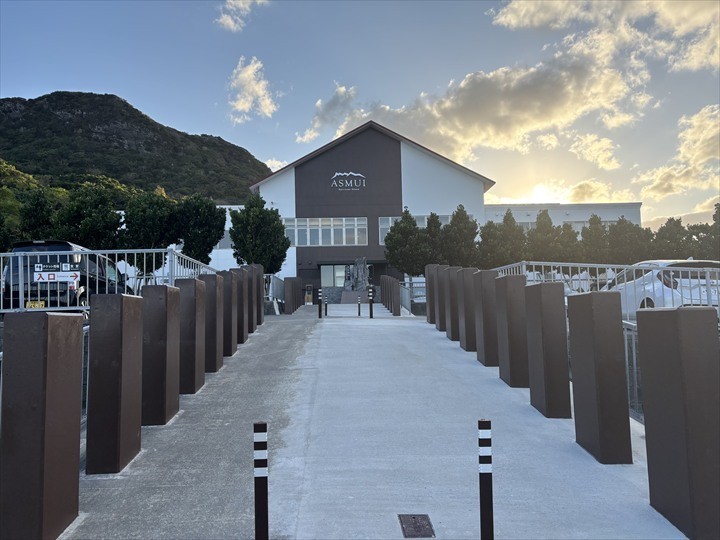
After purchasing tickets at the Stone Museum located on the slopes of Asmui, you will take a shuttle bus to the Spirit Lounge, the starting point for the walking trails.
The shuttle bus ride takes approximately 5 minutes and runs every 20 minutes.
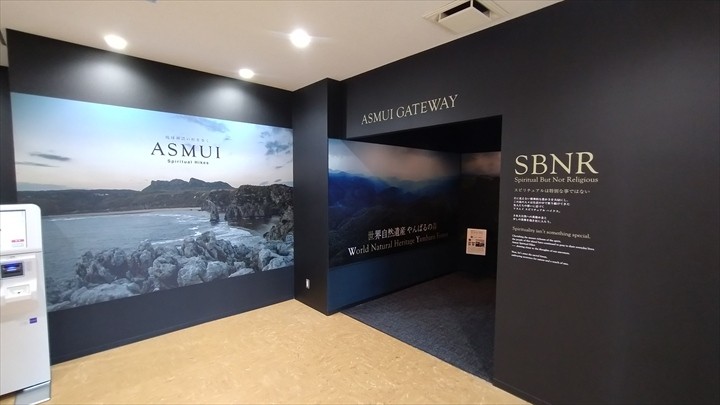
Before boarding the shuttle bus, you can immerse yourself in the world of Asumui through the exhibits at the "Asumui Gateway" entrance and the theater room. Additionally, by downloading the audio guide beforehand, you can enjoy hiking while listening to stories about the forest's nature and beliefs at 26 locations along the course.
3. Courses and highlights of the Asumui Hikings
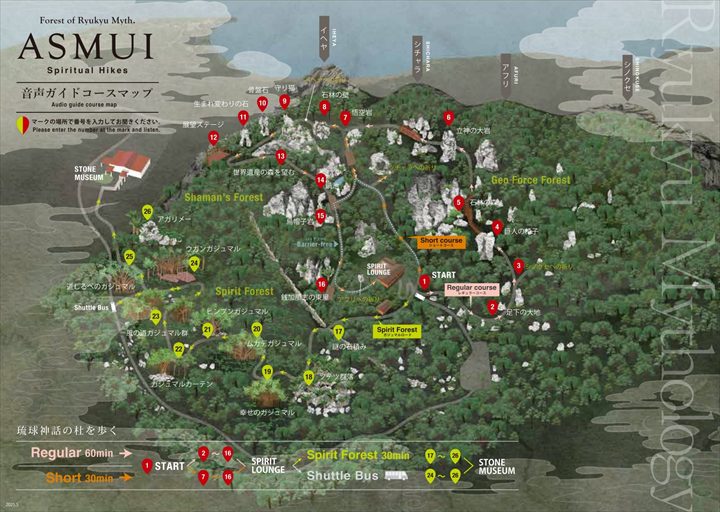
Upon arriving at the Spirit Lounge, staff will provide an explanation of the course and a short guided tour, after which you can begin exploring on your own.
There are three courses available: a regular course (approximately 60 minutes), a short course (approximately 30 minutes), and a barrier-free course (approximately 20 minutes). You can choose a course that suits your physical condition and the amount of time you have available.
Upon returning to the Spirit Lounge, you'll be offered complimentary drinks, allowing you to relax amidst nature. After your break, head to the Stone Museum. You can either take a shuttle bus or walk down the mountain along the Banyan Tree Road (approximately 30 minutes).
Let's recharge our energy in the Stone Forest.

The regular course starts in an area called Geoforce Forest. You walk through a network of strangely shaped rocks and massive boulders. The land and rocks beneath your feet are limestone that originated from coral reefs that were on the seabed more than 200 million years ago, and have been moved, uplifted, and eroded over a long period of time. You can feel the awe-inspiring power of tectonic shifts.
The courses have little variation in distance, so even those who are not confident in their physical fitness can enjoy the stony forest unique to karst terrain.
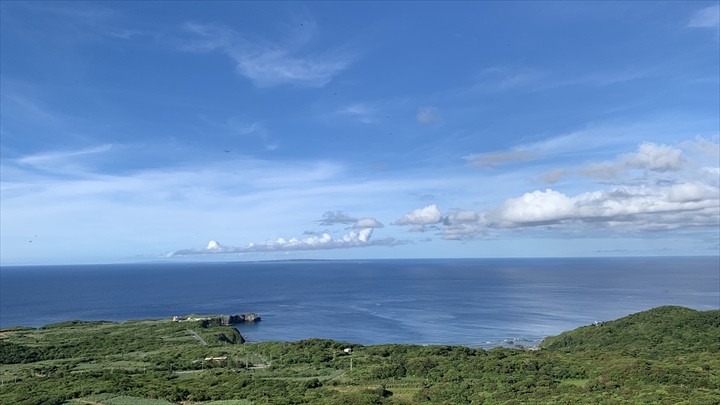
I was deeply moved by the blue of the sea as seen from the observation deck.
The Shaman's Forest area is dotted with many objects of worship for local shamans, known as "Yuta" or "Kaminchu." One of the most noteworthy is the "Stone of Rebirth." You can pass through the hole in the middle of the stone, and it is said that if you pass through it three times, you will be reborn.
The observation deck near the summit offers a dynamic and impressive view, overlooking Cape Hedo and Uzahama, where ancient people are said to have landed after crossing the sea. If the weather is clear, you can even see Yoron Island and Okinoerabu Island in Kagoshima Prefecture. It's also said that humpback whales can sometimes be seen there in winter, so it's definitely a place I'd like to visit.
Encountering banyan trees of various shapes and sizes
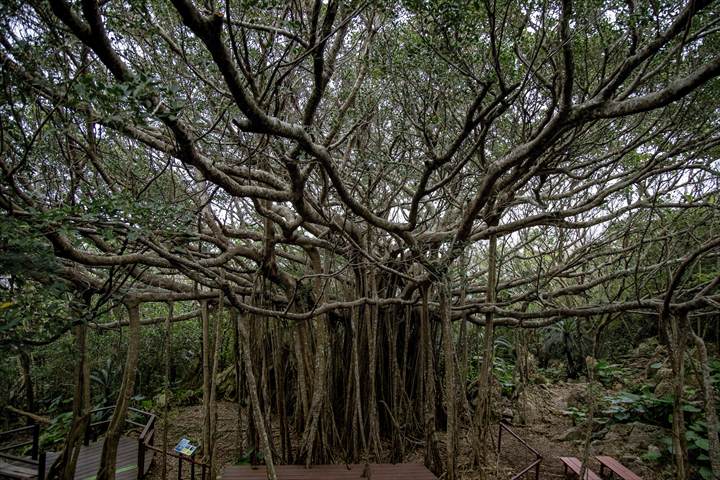
The Spirit Forest, the descent route, features a Banyan Tree Road with seven spots related to the banyan tree, a representative tree of the subtropics. You'll encounter distinctive banyan trees such as the "Happy Banyan Tree," where people have reported seeing or hearing spirits; the "Centipede Banyan Tree," over 200 years old with numerous roots growing from its branches; and, just before the finish line, the "Ugan Banyan Tree," one of the largest in Japan and considered the master of this forest. Try to find your favorite banyan tree!
In addition, there are many other sights to see, such as the largest cycad colony on Okinawa Island and a mysterious stone wall, so if you have the energy and time, we recommend descending on foot.
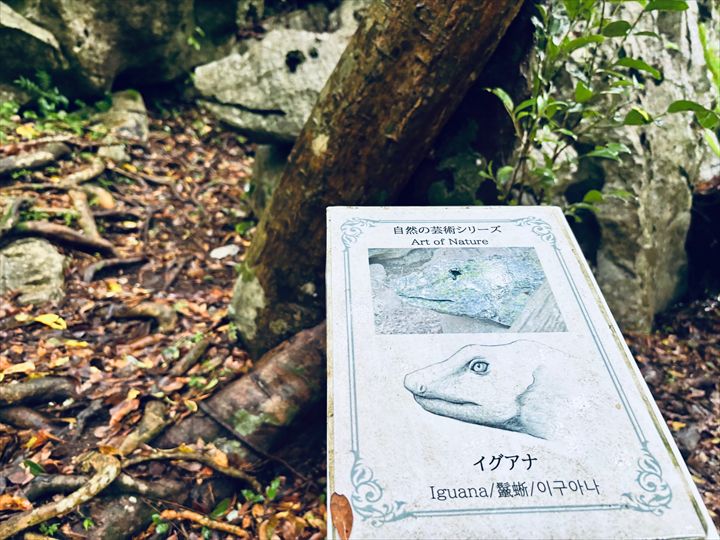 There are various explanatory signs along each course, but the "Natural Art" series, which features unusual rock formations, will make you stop and admire them. Here are just a few examples.
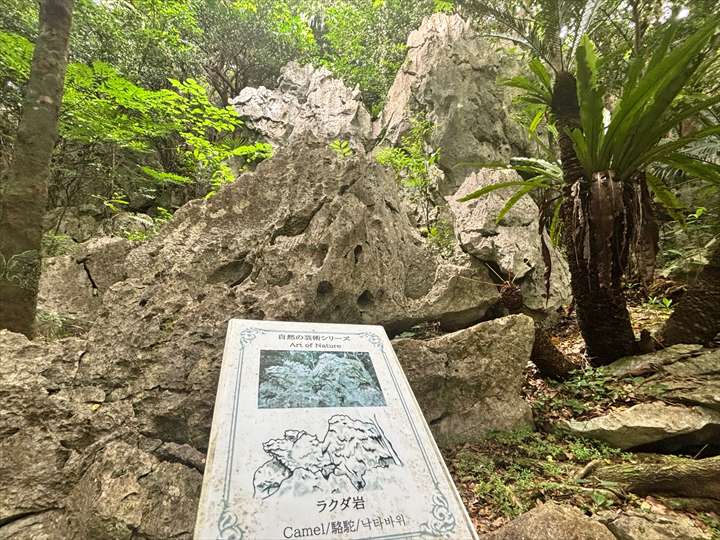
Camel Rock. Hmm...
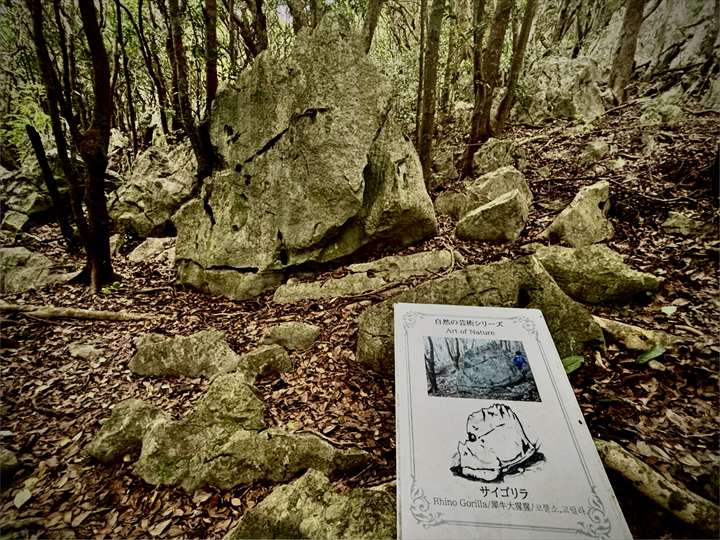
A rhino gorilla? Apparently, its horns are visible depending on the angle.

This time it's a little further away, but you can see it peeking out from between the trees.

If you take a closer look... some of you might have already figured it out.

It's a cat! I can only say, you did a great job finding it.

The reincarnation stone is like a journey through the womb. The first cycle represents bad past experiences such as love and illness, the second cycle resets you to a blank slate, and the third cycle represents rebirth.
Enjoy it along with your hike!
4. Access and Business Hours
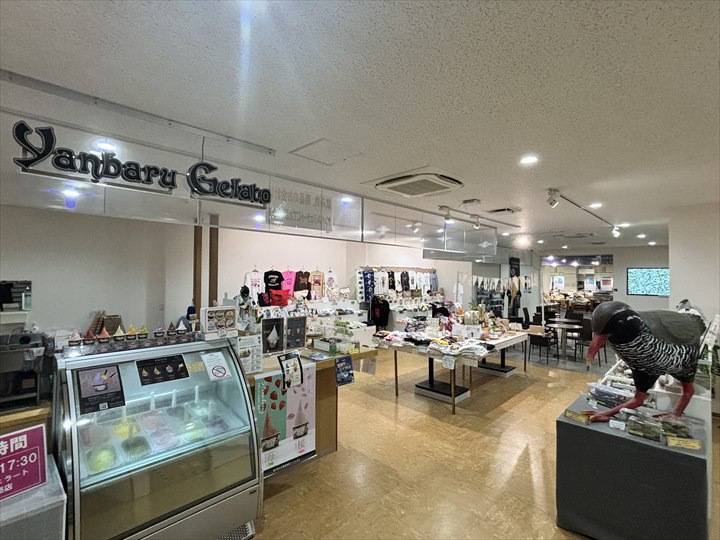
Inside the Stone Museum, where the ticket office is located, you'll find a stone museum exhibition room, a restaurant, and a shop selling souvenirs and Yanbaru gelato. The unique souvenirs are fun to look at, even if you're not buying anything.
A hike through the forest of Ryukyu mythology. You'll feel a sense of accomplishment and a strangely refreshing feeling when you reach the finish line. Please wear comfortable walking shoes.
Near Asumui, there are other tourist spots such as Cape Hedo, the Yanbaru Rail Observatory, and Kayauchi Banta, so exploring the far reaches of Okinawa is highly recommended.
- Address
- 1241 Ginama, Kunigami Village, Okinawa Prefecture
- TEL
- 0980-41-8117
- Business hours
- 9:30 AM - 17:30 PM (Last entry 16:00 PM) Open all year round
- Remarks
- Admission fees: 15 years and older / 2,500 yen; 6 to 14 years old / 1,000 yen
Articles from the same area
 I participated in a bus tour of northern Okinawa, visiting places like Oishirinzan and Churaumi Aquarium.
 "Arukashiruka" is a unique food spot on Yagaji Island.
 Opened in June 2019! Enjoy a relaxing stay at YANBARU HOSTEL.
 Enjoy the outdoors at Higashimura Village Forest Tsutsuji Eco Park! A thorough investigation of the campsite and bungalows.
 I went on a factory tour of Helios Brewery, a producer of awamori (Okinawan distilled spirit) made using natural methods.
 Enjoy a fruit-filled acai bowl on a terrace with a panoramic view of Kouri Bridge! [Nankuru Kitchen]
Articles on the same topic
 Umisora Cafe: A Hawaiian-style cafe and natural goods store with ocean views.
 Ie Island Tourist Attractions | A 30-minute boat trip from Okinawa Main Island
 Tsufutsuwa Hishi (Tsufutsuwa Reef) | A snorkeling and diving spot recommended by Miyako Island Marine Shops!
 A collection of Instagrammable wall art in Okinawa | Take cute, Okinawan-style photos
 I want to do it again! Okinawa soba noodle making experience @ Murasaki Mura
 Enjoy the starry sky of Ishigaki Island at the hidden farm bar "BAR Live Free"!