


Hello to all of you who love Okinawa!
"Haisai (Haitai) = Hello"
"Mensore = Welcome"
"Nifee deebiru = Thank you very much"
When traveling in Okinawa, you'll encounter "Uchinaguchi" (the Okinawan dialect) in various places.
Those warm, comforting words really give you that "I've arrived in Okinawa!" feeling, don't they?
So, this time, I'd like to introduce some common things about the Okinawan dialect!
A wife who moved to Okinawa about two years ago shares some of the slightly strange and amusing "Okinawan dialect quirks" she's encountered in her daily life. If you can master these, you too can become an Okinawan!?
(※While all events described in this article are factual, they are based solely on what the expat wife heard and experienced. Also, some of the words mentioned may not strictly be classified as dialects, but are included here as "common expressions heard in Okinawa." Please forgive any inaccuracies.)
<Table of Contents>
1. A convenient interjection you'll find yourself saying without thinking: "That's why..."
2. A convenient expression of empathy that you'll find yourself saying without thinking: "That should be good."
3. "Let's do ○○" - not an invitation.
4. "To put on clothes" "To put on glasses"
5. Value the other person's perspective: "I'm receiving this," "When are you coming back?", "I'm coming now!"
6. Knowing each other's words brings us closer!
1. A convenient interjection you'll find yourself saying without thinking: "That's why..."

Let's start with the indispensable phrase "That's why..." in conversations among friends!
This is an extremely common and highly contagious Okinawan dialect word used by people of all ages. Therefore, you'll find yourself using it without even realizing it. If someone says "dakara yo" to you during a conversation, it's a sign that you've become friends.
[That's why...]
"meaning"
: That's right, I see, That's true!, Right? etc.
Synonyms
: That's why / That's why / So / So
Native Point
This is a magical interjection that can be conveniently adapted to the nuances and atmosphere of the situation. It can be used to affirm or deny what the other person is saying. However, it should not be used in formal settings or with superiors.
There's also an advanced technique of using it when you want to end a long conversation at an appropriate point. With someone you know well, you can often have a complete conversation just by saying "So, you see..." to each other.
Common mistakes
A: "We need to go grocery shopping before the typhoon makes landfall!"
B: "That's why..."
A: "...?
[Explanation]
In this case, B's "That's why..." is an interjection meaning "That's right..."
When someone says "therefore," we tend to expect a suggestion or empathetic statement like "that's why..." to follow, but the conversation is perfectly fine as it is.

Advanced Application Section
A: "○○ is ××..."
B: That's why...
A: "I think it's △△, but I'm also curious about ■■."
B: "That's why!"
A: "But it's still ○△■, right?!"
B: "That's why..."
[Explanation]
By using these techniques effectively, you can have stress-free conversations even with people who tend to talk a lot.
However, while "That's why..." is a versatile phrase, it's a double-edged sword because if you don't properly grasp the other person's nuances, you'll be labeled as someone who "can't read the room."
It is important to pay attention to the usage and dosage of everything.
2. A convenient expression of empathy that you'll find yourself saying without thinking: "That should be good."

Next up is another Okinawan dialect phrase that I find myself saying without even realizing it: "It should be good."
It's used by both men and women, but it's especially common in conversations between women. It's one of the first Okinawan dialects that wives who have moved to Okinawa started using naturally.
[It should be good | i↓i↑ha↑zu↑]
"meaning"
: That's great! ・I'm jealous ・That's nice
Synonyms
: "Jōtō" / Good job, well done, sufficient.
Native Point
Both are used to praise things or people, but "ii hazu" (should be good) has a stronger connotation of envy, while "joto" (excellent) has a stronger connotation of admiration. Although they are generally positive in meaning, depending on the situation they can turn into a sarcastic remark that stings the other person.
Common mistakes
A: "I bought some new clothes, do you think they suit me?"
B: "It should be fine!"
A: "...(Does that mean it doesn't suit me?)"
[Explanation]
When "hazu" is added, it tends to be perceived as vague and negative, but in this case, it means "That's great!", so don't be discouraged!
You might actually be getting a little stung.
B: "I drank too much yesterday."
A: "It should be good."
[Explanation]
If someone says "That should be fine" with a detached look, it's more like, "Oh, how enviable your position is!" Don't misunderstand.
If someone says "That's great" with a similarly detached look, it carries a nuance of "I think you did pretty well for someone like you." Don't misunderstand.
Articles from the same area
 Try "Okinawa 100 Yen Soba"—a unique Okinawan delicacy!
 I tried 12 different Okinawan beers and craft beers!
 Can you go skydiving in Okinawa? We'll answer your burning question!
 GoTo Campaign Eligible Okinawa Tours: Summary of Key Points Including Discount Amounts and Exclusion Rules
 A scenic drive around the main island! A trip to enjoy delicious Okinawan local snacks.
 We tried and compared 8 different types of "Jushi no Moto," a staple of Okinawan home cooking!
Articles on the same topic
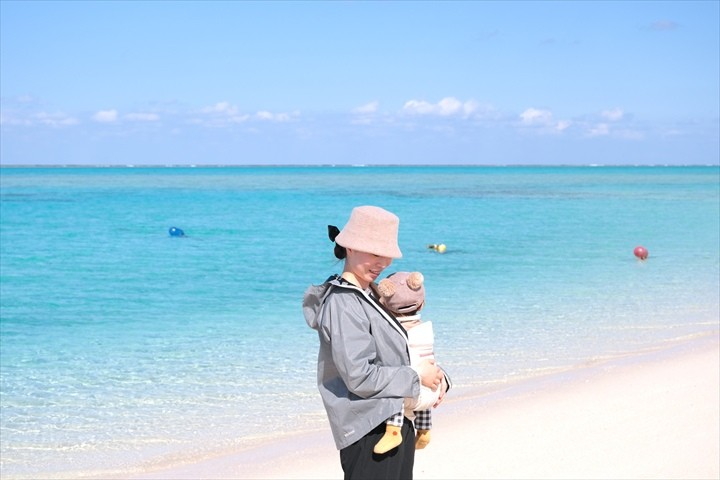 Relax with your family! A travel guide to Kumejima Island, perfect for those traveling with babies.
 Kin Town is like this: A retro town full of unique spots.
 Okinawa Spring Break Travel Guide | Climate, Recommended Spots, and How to Spend Your Time - A Complete Guide
 So many airports! A summary of basic information on all 13 airports in Okinawa.
 What's at Tedako-Uranishi Station, the last stop on the Yui Rail? ~Nearby sightseeing and convenient spots~
 Summary of beach opening information for Okinawa Main Island | Top 20 beaches [2026]