




Did you know that in Urasoe City, a town adjacent to Naha City, there remains a castle that served as the center of the Ryukyu Kingdom even before Shuri Castle? That castle is called "Urasoe Castle Ruins."
Before the royal palace was moved to Shuri Castle, for over 200 years, from the 13th to the 15th centuries, it served as the residence of the Ryukyu Kingdom's Chuzan (central mountain) under three different royal lines. It's a very large historical site, but I'd like to introduce some of its highlights and how to get there.
Approximately 10 minutes on foot from Urasoe-Maeda Station on the Yui Rail.
 The ruins of Urasoe Castle are located about a 10-minute walk from Urasoe-Maeda Station.
Urasoe-Maeda Station is three stations away from Shuri Station, which is the closest station to Shuri Castle.
The Yui Rail is an essential mode of transportation for sightseeing in Naha, and it's great that it runs all the way to Urasoe City in one go.
Many castle ruins are difficult to visit without a car, but Urasoe Castle Ruins can be accessed by the Yui Rail and on foot.
If you plan to stop at stations along the way and enjoy sightseeing, purchasing a one-day pass for the Yui Rail (800 yen) is also recommended.
Excavation work is still ongoing! Approaching Urasoe Castle Ruins from the south.
 The "Urasoe Castle Ruins" are located in a corner of the park that has been developed as Urasoe Grand Park.
The park is very large, but if you want to enjoy a stroll, the southern area is recommended. It's about a 10-minute walk from Urasoe-Maeda Station, and you'll arrive at the "Entrance Management Office" located on the south side of the park. If you walk up the ramp that leads from there, you can enter the park.
 When I visited, the castle wall, which was under investigation, was exposed on the wall at the entrance. Apparently, the excavation work began in October 2022 and is still ongoing as of January 2024. This castle wall is said to be 600 years old and is a valuable relic that could be a major clue in the restoration of Urasoe Castle. Even in a park that has been developed, there is a certain romance to the fact that history is still lying dormant.
Climbing up to the ruins of Urasoe Castle, you'll find picturesque scenery and a breathtaking panoramic view.
 Walking along the cobblestone path and passing in front of Urasoe Castle, you finally enter the castle ruins. The area near the top of the castle is treeless, making it a great spot for taking picturesque photos with the sky as a backdrop. Looking back, you'll also be treated to a magnificent panoramic view of Naha city and the beautiful Okinawan sea.
 After arriving at the plaza, a short walk north along the paved path will take you to the magnificent walls of Urasoe Castle. However, these are actually replicas. After the Battle of Okinawa in World War II, the castle walls were removed, but they have been restored using the remaining cut stones.
 Beyond the castle walls lies an observation deck. Located on a hill of Ryukyu limestone approximately 130 meters above sea level, Urasoe Castle Ruins boasts a location that offers panoramic views of the East China Sea and even as far as Yomitan. This spectacular view of Okinawa Island has remained intact since the castle's heyday.
The large-scale "Urasoe Yōdore" evokes the prosperity of the Ryukyu Kingdom.
 When visiting the Urasoe Castle ruins, one spot you absolutely must stop by is "Urasoe Yōdore." You can reach it by descending the stairs near the replica of the castle wall. Urasoe Yōdore is the Ryukyu Kingdom's mausoleum where King Eiso and King Shōnei are buried along with their family.
 It also suffered significant damage during the Battle of Okinawa, but after post-war excavations, it was restored to its current state. Based on the research findings, it is believed that the initial construction dated back to around the 13th century, and it truly possesses a scale that speaks to the grandeur of the Ryukyu Kingdom.
 Walking around like this, you can see that the current landscape of Urasoe Castle Ruins has been created through numerous archaeological excavations! It's a place where you can reflect on the history of the Ryukyu Kingdom, and at the same time, it's a place where you can look forward to seeing how it will be restored in the future. I highly recommend taking a short detour from your Naha sightseeing to visit Urasoe Castle Ruins.
- Address
- Nakamayama Kawahara, Urasoe City, Okinawa Prefecture
- Remarks
- Access: Yui Rail, Kencho-mae Station (Kokusai-dori) to Urasoe-Maeda Station, 340 yen one way, approximately 21 minutes.
If you are coming by car, we recommend using the Urasoe Castle Ruins parking lot.

Yuhei Tonosho, a cyclist and photographer who delves deep into Japan
Born in 1993 in Toyota City, Aichi Prefecture. Graduated from Doshisha University, Faculty of Letters, Department of Cultural History and Department of English Literature. While working as a salaryman, he is a travel writer who travels all over Japan by bicycle and mountain climbing. He captures and shares the changing seasons of Japan with all his senses.


Shirokuma Tours offers affordable Okinawa package tours. A wide variety of options are available, including tours to Ishigaki and Miyako Islands.


For local experiences and optional tours such as snorkeling and sightseeing bus tours, choose Tabi Plus One.


For diving in Okinawa, from license acquisition and fun dives to introductory experiences, choose Oceans Dive Tour.
Articles from the same area
 Enjoy ocean views from the terrace! Take a break from your travels at Wagyu Cafe KAPUKA.
 Retro and charming Minatogawa foreign residences | Recommended lunch spots, cafes, and shops
 "Awamori Festival" October 5th, 2024 (Sat) An event where you can discover fun ways to drink Awamori @ Mihama American Village
 Chatan's Specialty Products ② Sweets Edition | Okinawa Souvenirs You Can Talk About! Introducing Chatan Brands that the town proudly proclaims as "This is Chatan Town."
 Diving in Okinawa's Blue Cave! [Introductory Diving & Fun Diving]
 Open only 3 days a week! Kino Store: A sweets shop worth making a special trip for.
Articles on the same topic
 Take a water buffalo cart across the sea to Yubu Island...a small paradise on a southern island!
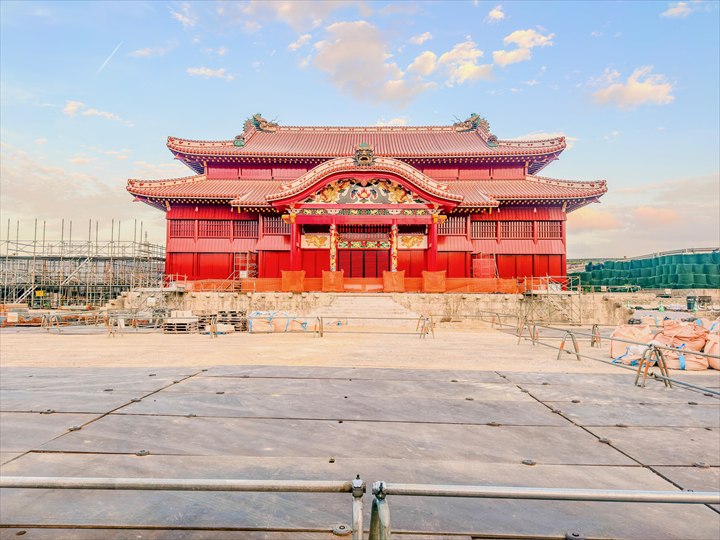 [Limited-time New Year's holiday special opening] 9 days to see Shuri Castle's main hall "from the front"
 A model sightseeing course to fully enjoy Yonaguni Island, Japan's westernmost point.
 A journey to experience the sacred power of Okinawa. 7 power spots on Okinawa Island!
 Stunning beauty! 15 of Okinawa's best sunset spots, categorized by type.
 Shuri Textile Museum Suikara | A world of stories about beautiful Okinawan traditional fabrics woven with rich colors